vacuuming-hepa-filters-allergies-uk-homes
Affiliate Disclosure: As an Amazon Associate, we earn commissions from qualifying purchases made through links on this page. This comes at zero extra cost to you and helps support our hands-on review process.
Section 1: The Unseen Inhabitants: Allergens and Air Quality in UK Homes
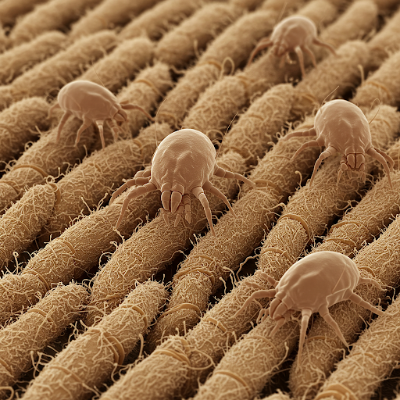 Dust Mites on Carpet
 Dust Mites and Mould Spores
1.1 The Importance of Indoor Air Quality (IAQ)
The quality of the air inside our homes is a critical determinant of health, yet often overlooked. Individuals in developed nations, including the UK, spend a substantial portion of their lives indoors – estimates suggest up to 90%. This prolonged indoor time means that the concentration and nature of airborne pollutants within homes can significantly impact well-being. Research indicates that indoor levels of many pollutants can be two to ten times higher than those found outdoors. Poor IAQ is not merely an inconvenience; it carries a significant public health burden. Globally, exposure to poor indoor air is associated with the loss of millions of healthy life years annually and contributes to a substantial number of premature deaths.
The health implications of IAQ are particularly pronounced for vulnerable populations. Babies, young children, older adults, and individuals with pre-existing respiratory conditions such as asthma or Chronic Obstructive Pulmonary Disease (COPD), as well as those with allergies, are often more susceptible to the effects of indoor pollutants. Exposure can lead to a range of health effects. Immediate reactions might include irritation of the eyes, nose, and throat, headaches, dizziness, and fatigue. For those with allergies or asthma, poor IAQ can trigger or exacerbate symptoms like sneezing, wheezing, coughing, and shortness of breath. Over the longer term, chronic exposure to certain indoor pollutants has been linked to the development or worsening of serious conditions, including respiratory diseases, heart disease, and even cancer.
1.2 Common Indoor Allergens in UK Homes
UK homes harbour a variety of biological and non-biological particles that can affect IAQ. Among the most significant from a health perspective, particularly for allergy sufferers, are indoor allergens. The primary culprits commonly found in UK households are house dust mites (HDMs), mould spores, and pet dander (from cats, dogs, and other furry animals). These allergens are major concerns for individuals living with allergic conditions.
- Focus on House Dust Mites (HDMs):* HDMs are arguably the most pervasive indoor allergen source. These microscopic arachnids, invisible to the naked eye, are not parasites living on humans but rather scavengers that feed primarily on the dead skin cells we naturally shed. Crucially, HDMs are found in virtually all homes, regardless of cleanliness levels. They thrive in specific environmental conditions, preferring warmth and humidity.
The allergy itself is typically not to the mites but to the proteins contained within their droppings (faecal pellets) and, to a lesser extent, their body fragments. Key allergenic proteins identified in research include Der p 1 and Der f 1, along with Der p 2, Der f 2, and Der p 23. These microscopic particles readily become airborne when disturbed.
HDMs colonize areas where their preferred conditions and food sources are abundant. Common habitats include mattresses, pillows, duvets, carpets, upholstered furniture (sofas, chairs), curtains, and soft toys. Of all locations, bedrooms, and specifically beds (mattresses, pillows, duvets), are consistently identified as the most significant reservoirs for HDMs. This is due to the ideal combination of warmth and moisture generated by body heat and perspiration during sleep, coupled with a plentiful supply of shed skin scales.
The universal presence of HDMs in homes means that complete elimination is impossible. Therefore, management strategies, including cleaning practices like vacuuming, realistically aim to reduce mite populations and allergen levels, rather than achieve eradication. Understanding this is key to setting achievable goals and evaluating the effectiveness of interventions. Furthermore, the concentration of HDMs in bedding highlights the bedroom as a primary target for allergen reduction measures. Given that individuals spend roughly one-third of their time in bed, minimising exposure in this high-allergen, high-occupancy zone is a logical priority for mitigating health impacts.
1.3 Health Impacts of Indoor Allergens
Exposure to indoor allergens like HDM droppings, pet dander, or mould spores can trigger a cascade of reactions in individuals who have become sensitised. When these airborne particles are inhaled or come into contact with the skin or mucous membranes, the immune system of an allergic person mistakenly identifies them as harmful invaders, initiating an inflammatory response.
This response manifests in a variety of symptoms. Common allergic reactions include sneezing, a runny or blocked nose (allergic rhinitis), itchy, red, or watery eyes (allergic conjunctivitis), coughing, and wheezing. Skin reactions, such as the itchy rash associated with atopic eczema, can also be triggered or worsened by allergen exposure.
Crucially, indoor allergens are strongly linked to the exacerbation and potentially the development of chronic respiratory conditions. HDM allergy is a major risk factor associated with asthma, particularly in children, with studies suggesting up to 85% of asthmatic children are sensitized to HDMs. High levels of HDM allergen exposure in the home environment can worsen asthma symptoms, increase bronchial health issues, and trigger asthma attacks. Conversely, reducing exposure has been associated with symptom improvement. HDM allergy is also a common cause of perennial allergic rhinitis, leading to year-round nasal symptoms often mistaken for frequent colds.
The link between dust exposure and symptoms is supported by survey data; for instance, a survey by Asthma + Lung UK found that 1 in 2 people with a lung condition reported that dust made their condition worse. Furthermore, research indicates that as many as a third of individuals with eczema who test positive for HDM allergy report a worsening of their skin or respiratory symptoms upon exposure to dust.
- --
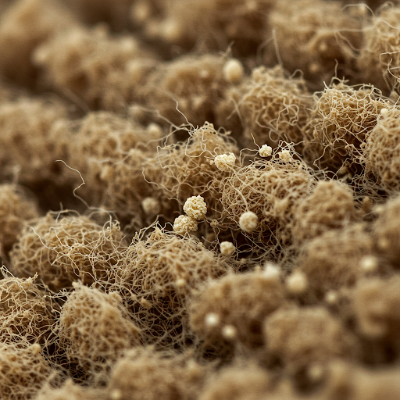 Pet Dander on Carpet
Section 2: Vacuuming as an Intervention: How Does it Help (or Hinder)?
2.1 The Primary Goal: Removing Allergen Reservoirs
Vacuum cleaning is a fundamental component of household cleaning routines, primarily aimed at removing visible dirt and debris. From an IAQ and allergy management perspective, its key role is the removal of settled dust from surfaces, which acts as a reservoir for microscopic allergens. This dust harbours HDM faecal pellets, fragments of mite bodies, pet dander, pollen grains tracked in from outdoors, and mould spores.
Flooring, particularly carpeting, is a major dust and allergen reservoir within the home. Compared to hard flooring, carpets can trap significantly more dust and associated allergens, and these particles are often more difficult to remove effectively. Upholstered furniture, curtains, and mattresses also accumulate dust over time. By physically removing this accumulated dust through suction, vacuuming aims to reduce the total load of allergens present in these reservoirs. This, in turn, should decrease the amount of allergen available to become airborne through everyday activities like walking, sitting, or making beds, thereby reducing occupants' exposure.
2.2 The Challenge of Resuspension
Despite the goal of dust removal, the very act of vacuuming can paradoxically lead to a temporary increase in airborne particle concentrations. Several factors contribute to this phenomenon. The movement of the vacuum cleaner across the floor, the action of rotating brush bars designed to dislodge dirt from carpets, and even the foot traffic of the person operating the machine can disturb settled dust, causing particles to become suspended in the air.
This resuspension effect means that during and immediately after vacuuming, the concentration of airborne dust and allergens in the room can be higher than baseline levels. This poses a potential risk of increased personal exposure for the individual performing the cleaning, as well as for anyone else present in the vicinity. This is the rationale behind recommendations for allergy or asthma sufferers to avoid being in the room while vacuuming is taking place and for some time afterwards, allowing airborne particles to settle.
2.3 Vacuum Cleaner Emissions
Beyond the resuspension of existing dust, vacuum cleaners themselves can act as sources of indoor air pollution. There are two primary mechanisms for this:
- Leakage: Particles collected by the vacuum can escape back into the room if the appliance does not have an adequately sealed system. Air and entrained particles can leak through gaps in the casing, around improperly sealed filters, or from the dust bag or collection bin during operation. This is particularly problematic if the leaked air bypasses the main filter. The process of emptying bagless vacuum cleaners is also a well-recognised point of potential dust release.
- Motor Emissions: The electric motor powering the vacuum cleaner can generate and emit particles during operation. Studies have detected fine and ultrafine particles in vacuum cleaner exhaust, suggesting origins within the motor components. Research suggests that brushed motors may generate more particles than brushless designs.
The dual nature of vacuuming – removing settled dust while potentially increasing airborne dust and emitting particles – creates a complex situation. It underscores that simply owning a vacuum cleaner is not enough; the design and efficiency of the machine, along with how and when it is used, are critical factors.
- --
 Mould Spores on Carpet
Section 3: The Frequency Factor: Daily vs. Weekly Vacuuming
The question of how often floors should be vacuumed to optimise health benefits, particularly concerning allergen control, is a common one for UK families.
3.1 Official Recommendations (UK Focus)
Guidance from established UK health organisations often provides a baseline recommendation. Asthma + Lung UK and various NHS Trusts typically advise vacuuming floors and furnishings weekly as part of a standard set of measures to reduce exposure to house dust mites. Some guidance specifically suggests vacuuming upholstered furniture, a known dust reservoir, even more frequently, perhaps twice a week. These recommendations are usually presented alongside other essential actions, such as weekly damp dusting of surfaces to capture dust without making it airborne.
3.2 The Case for More Frequent Vacuuming (Daily/Bi-Weekly)
While weekly vacuuming is a common guideline, some evidence and general advice suggest that more frequent cleaning could offer additional benefits, especially for households with specific needs. General cleaning advice sometimes recommends vacuuming 1-2 times per week, or even daily if practical, as an effective strategy for managing general dust and allergen levels. Homes with pets, which introduce additional dander and hair, or those with individuals suffering from allergies or asthma, may find vacuuming two to three times per week, or even more often, necessary to keep allergen levels under control.
Specific research lends support to the potential benefits of higher frequency. A notable study involving children with mild persistent allergic rhinitis sensitised only to HDMs investigated the effects of daily mattress vacuuming over two weeks, using a handheld vacuum with a HEPA filter. The results showed a statistically significant improvement in the children's allergic rhinitis symptoms, including sneezing, nasal obstruction, and itching. Interestingly, while the total weight of dust collected from the mattresses decreased significantly, the measured concentration of the major HDM allergens in the remaining dust did not show a significant change over the two-week period. This intriguing finding suggests that daily removal of surface dust might reduce immediate exposure and symptoms, even if the deeper allergen reservoir concentration isn't rapidly depleted.
Another study directly compared weekly versus monthly vacuuming frequencies. It found that weekly vacuuming was more effective at reducing the concentration of HDM allergens compared to monthly vacuuming. Furthermore, some successful multi-component intervention studies aimed at reducing asthma symptoms in children have included vacuuming twice weekly as part of their protocol.
3.3 The Counterarguments and Complexities
Despite potential benefits, increasing vacuuming frequency is not without potential downsides and complexities. More frequent vacuuming inherently means more frequent occurrences of dust resuspension events, potentially leading to repeated short-term increases in airborne particle levels. There is also the practical consideration of time commitment and potential increased wear on carpets and the vacuum cleaner itself.
Furthermore, the scientific literature is not uniformly positive about the effects of vacuuming. Some research has reported associations between the act of vacuuming (often without specifying frequency or vacuum type) and increased sensitisation to dust mites or higher levels of allergy biomarkers in asthmatics. It is crucial to note that these studies show association, not causation, and often lack detail on the vacuum technology used.
Perhaps most significantly, numerous systematic reviews have consistently concluded that allergen avoidance measures, when implemented in isolation, generally show limited or no significant effect on overall clinical outcomes for asthma. This applies to physical methods like vacuuming and mattress covers. However, these same reviews often note that multi-component strategies, combining several avoidance measures simultaneously, appear to be more effective. This strongly suggests that vacuuming frequency is just one piece of a larger puzzle.
3.4 Summary of Vacuuming Frequencies
- Daily (Mattress/High Priority Areas): Supported by clinical symptom studies. Significant reduction in allergic rhinitis symptoms. May manage acute exposure peaks from surface dust. Potential drawbacks: Increased frequency of resuspension. No significant change in measured bulk allergen concentration short-term. Practicality. Key consideration: Focus on high-risk areas (bedroom), requires appropriate tool (HEPA).
- Daily (Whole House): Supported by general cleaning advice. May offer maximum reduction in surface dust/allergens if feasible. Potential drawbacks: Highest frequency of resuspension events. Significant time commitment. Practicality is a major factor; vacuum quality is critical.
- Twice Weekly: Supported by upholstery guidelines and multi-component study protocols. Part of effective multi-component plans improving asthma outcomes. Recommended for higher-need households. Potential drawbacks: Moderate frequency of resuspension.
- Weekly: Standard NHS/Asthma+Lung UK advice. Baseline recommendation for general hygiene. More effective than monthly at reducing allergen concentration. Manages general dust accumulation. May not be sufficient for highly sensitive individuals or high-allergen homes.
- --
Section 4: Technology Under the Microscope: Vacuum Types and Health Outcomes
Beyond frequency, the type of vacuum cleaner used can significantly influence its effectiveness in removing allergens and its impact on indoor air quality.
4.1 Filtration: The HEPA Standard and Beyond
The filtration system is arguably the most critical component determining a vacuum cleaner's impact on airborne particles. The benchmark standard is the HEPA (High-Efficiency Particulate Air) filter.
- Definition and Mechanism: A true HEPA filter must remove at least 99.97% of airborne particles that are 0.3 micrometres (μm) in diameter. These filters work by forcing air through a dense mat of fine fibres (often fibreglass or synthetic polymers), trapping particles through a combination of interception, impaction, and diffusion.
- Evidence and Recommendations: HEPA filtration in vacuum cleaners is widely recommended by health organisations in the UK. Research supports this recommendation, showing that vacuums equipped with HEPA filters can significantly reduce the emission of particulate matter from the vacuum's exhaust compared to models with less efficient filters.
- The Crucial Caveat: Sealed Systems: A critical point often emphasised by experts is that the HEPA filter itself is only part of the equation. For the vacuum to effectively clean the air passing through it, it must possess a sealed system. This means that all the air drawn into the vacuum is forced through the HEPA filter before being exhausted, with no significant leakage around the filter or through cracks and joints in the casing. A high-quality HEPA filter installed in a poorly sealed machine will allow allergen-laden air to bypass the filter and be released back into the room.
4.2 Agitation: Brush Motorheads vs. Suction-Only
- Brush Motorheads: Commonly found on upright vacuums, these consist of a rotating brush powered by a motor. The purpose is to agitate carpet fibres, loosening embedded dirt, dust, and allergens, making them easier to lift.
- Suction-Only: Many cylinder vacuums used primarily on hard floors rely solely on the power of the airflow (suction) to pick up debris.
- The Trade-off: While brush agitation enhances cleaning performance on carpets, the mechanical action inherently disturbs the surface more than suction alone, contributing to the resuspension of fine particles. The ideal scenario involves a balance: sufficient agitation combined with powerful, consistent suction and highly efficient filtration.
4.3 Containment: Bagged vs. Bagless Vacuums
- Bagged Vacuums: Collect dust and debris in a disposable bag.
- IAQ Benefit: The primary advantage is hygiene during disposal. Dust and allergens are largely contained within the bag, potentially minimizing the release of a dust cloud when emptying.
- IAQ Drawback: Performance can degrade as the bag fills and airflow becomes restricted. Leakage during operation can be a substantial issue for some designs.
- Bagless Vacuums: Typically use cyclonic separation technology to spin dust out of the airflow and collect it in a reusable bin.
- IAQ Benefit: No ongoing cost of replacement bags. Many models feature washable filters. Consistent suction may be maintained better as the bin fills compared to some bagged models. See our reviews of the Dyson Animal range and Dyson Cylinder range.
- IAQ Drawback: The main concern is the potential release of a significant dust cloud when emptying the collection bin. Careful emptying technique (e.g., doing it outdoors directly into a larger disposal bag) is crucial.